
Connie Crothers | Lenny Popkin Quartet | Love Energy | NA1005
“‘Love Energy’ is the art of improvising in all its classic glory.” – Rob Leurentop, Knack Continue reading

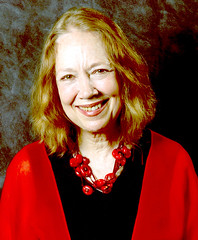 Connie Crothers reorganized in 1987 the New Artists label as a cooperative record company. She has participated in the expansion of this label to include an extensive catalog of CDs, all expressive of the company’s premise and label identity — improvised original music. New Artists Records was featured in the July 2000 Issue of Jazz Times. Connie Crothers appeared at Birdland, New York City, when the club featured the record label with performances by the artist-producers on April 5, 2000. Birdland presented the label on seven consecutive Saturday afternoon performances in May-June 2000; she performed with her quartet featuring singers Linda Satin and Harry Schulz. Birdland will present the label once weekly starting September 2000.
Connie Crothers, pianist, is known for her uncompromising approach to spontaneous improvisation. Seven of her CDs have been chosen by critics for their year’s best lists. Her quartet’s most recent CD, featuring Richard Tabnik, Roger Mancuso, Ratzo Harris– “Music is a Place” –was chosen by Stuart Broomer for his list of the best 10 records of 2007. “Love Energy,” a quartet record with Lenny Popkin, Carol Tristano and Cameron Brown, was voted #1 record of the year in Wire. Connie recorded duo with Max Roach, “Swish,” and performed duo with him at the Brooklyn Academy of Music, in Tokyo, and at Harvard University, where she was honored as Visiting Jazz Artist. She has performed solo in the Vision Festival and at Merkin Hall in NYC; the Berlin Jazztage; Jazz at Middleheim, Belgium; DuMaurier International Festival in Toronto; Carnegie Recital Hall. She performed with her band at the JVC New York Jazz Festival, De Singel, Belgium, Bim House, Netherlands. Other performances include appearances with Jemeel Moondoc, Henry Grimes, Kevin Norton, Kazzrie Jaxen, Roscoe Mitchell, Warne Marsh. She performed in the NYC venues Location One, The Stone, Tonic, The Village Vanguard.
“‘Love Energy’ is the art of improvising in all its classic glory.” – Rob Leurentop, Knack Continue reading

While one would expect her own compositions to be freeform vehicles, I was surprised and impressed by the way Crothers approached the standards. Songs such as “Lover Man”, “Star Eyes”, and “How High the Moon” are played with such originality that the melody lines are fully submerged under her interpretive direction. She projects the essence of the songs without ever having to make an overt statement on the theme. Only on the opening segment of “Good Morning Heartache” does even the slightest hint of the theme surface. This subtlety indicates an ability to hear far beyond the superficial level of melody. Crothers makes heavy use of the lower end of the register in probing the labyrinth she designs inside the songs. Her right hand adds the sparkling relief, but the most meaningful statements are derived from the bottom end of the sound spectrum. The tunes are the essence of full-bodied articulation, and her exploratory endeavor results in substantive music with power framed in a veil of tenderness. — Frank Rubolino, onefinalnote.com, September 2001. Continue reading

Bop in a light, relaxed groove, performed at a live date at the Blue Note in New York City. The program consists largely of easily swinging bop tunes, including some originals by Popkin and Crothers — her “Prez Says” is particularly delightful. They play two knotty Lennie Tristano compositions, too: “Leave Me” and “Lennie-Bird.” And there’s one ballad cover, “You Go to my Head,” which is a tour de force for Popkin’s sensuous tenor. This club date was in December, but this quartet plays like spring is here for good. — John Baxter, Option, Jan./Feb. 1991 Continue reading

They may have started as members of the Lennie Tristano school of jazz, but the members of this highly evolved and polished quartet, as much a collective as the band of pianist Crothers, has ventured far beyond the tenets of Tristano. They take liberties with time, tone, tempo, dynamics and attack that would horrify more orthodox Tristanoites. The lesson they do take to heart is the valuable one of perseverance, of the importance of playing their music as often as possible, or, as Crothers says, “I put a ton of time behind everything I do . . . I spend time with music. It’s a joy! Never work.” Continue reading

“Swish” reissues Crothers’ 1982 duets with Max Roach, who is definitely not a student of the Tristano school of passive drumming. The relative freedom of the duet setting fits the tension and energy of Crothers’ uninhibited playing much better. Roach is always fascinating in a duet, where he expands his role, occupying the open spaces in unexpected, always musical ways. Here, he focuses on different elements of the drum kit with each piece to give the largely improvised performances their distinctive character. The ways in which Roach reacts to and provokes Crothers are reminiscent of Roach’s Historic Concerts (1979) duets with Cecil Taylor. — Jon Andrews, Downbeat — August 1994 Continue reading

The quartet taps different energy levels and creates distinctive textures, so expect a performance that will fully involve your musical sensibilities. — Lois Moody, Jazz News Continue reading

From piece to piece the music moves smoothly from accurate melodies to intense interaction then soft and mysterious textures that allow poet Mark Weber’s poetry to come through. Through many gestures that could be modal, harmonically static, bebop harmony, dense or open, vertical or horizontal, there is a lot more conversation going on than in many standard jazz quintets. — Francis Lo Kee Continue reading

“NOTES FROM NEW YORK” is a sampler of the New Artists’ catalog, not so much a “greatest hits” collection, as an overview that features virtually all the talented musicians that have recorded for the label. Each of the performances rewards repeated listenings… This independent label’s future looks quite bright as it continues to infuse jazz with feeling, creativity, and fresh ideas.” — Scott Yanow, Editor, All Music Guide To Jazz. Continue reading